
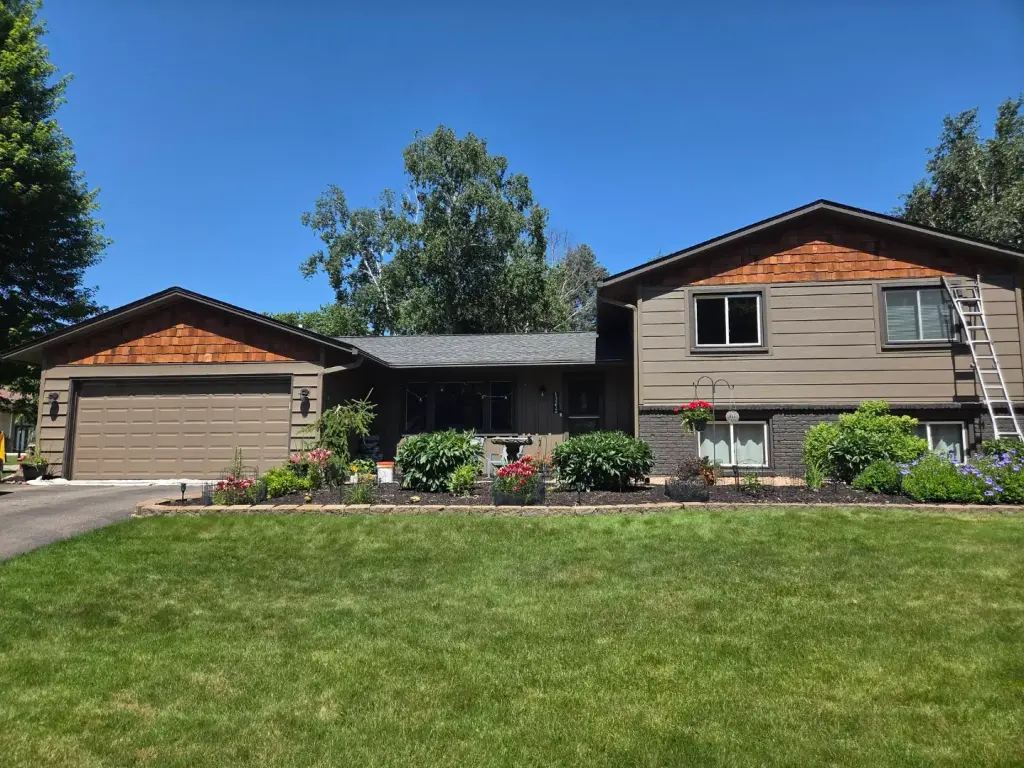
In Minnesota, exterior painting is a seasonal job. Between long winters and humid summers, the window for getting paint to cure properly is shorter than most people expect. Picking the right time affects how well the finish sticks, how it looks, and how long it lasts.
The short answer
For most Twin Cities homes, the best exterior painting months are late spring through early fall, roughly late May through September, with the most reliable stretch typically from June to early September. Spring and fall can work, but they come with more weather risk.
Why temperature matters
Paint needs the right conditions to form a durable film. Most modern exterior acrylics and stains list a minimum application temperature on the can. Many are fine down to around 35–50°F, but that depends on the product, so always read the label. Also consider:
- Surface temperature, not just air temperature. Siding in direct sun can be much hotter than the air, while shaded north walls stay cool.
- Overnight lows. Paint that's applied in the afternoon can be hit by cold or dew that night before it has cured.
- Too hot is a problem too. Painting in blazing direct sun makes paint dry too fast, which can cause lap marks, blistering and poor adhesion.
Watch humidity and rain
Moisture is a bigger enemy than most people think.
- Don't paint when rain is forecast within several hours of application.
- Morning dew must burn off before starting.
- High humidity slows drying and can leave a tacky finish.
- Wood siding must be dry, so wait after a stretch of wet weather.
Season by season
Spring. Once the snow is gone and the wood has dried out, late spring is a good time. Early spring is unpredictable, with cold nights and wet ground. A spring paint job also means your home looks good for the whole summer.
Summer. This is the most dependable season. Days are long and dry, which gives crews more usable hours. It's also the busiest time for painters, so schedules fill up.
Early fall. September is often excellent: milder temperatures, lower humidity and stable weather. The catch is that the window closes quickly once nights start dropping into the 30s and 40s.
Winter. Exterior painting is generally not practical in Minnesota winters. Interior projects are a better use of those months.
Plan ahead
Because the good weather window is short, the best painters book up early. A few suggestions:
- Get estimates in winter or early spring. You'll have more scheduling choices.
- Think about prep. Scraping, caulking, wood repair and power washing all come before paint. Good prep often takes as much time as the painting itself. See our page on painting prep and finishing for what this involves.
- Consider your siding. Wood, fiber cement, brick and stucco each have different prep and product needs.
- Look for warning signs. Peeling, cracking, chalky residue, bare wood or failing caulk mean it's time, whatever the month.
What about decks and stain?
Deck and fence stain follows the same rules, but wood must be dry and clean. Plan stain jobs for a stretch of dry days and allow time for the wood to absorb and cure before foot traffic.
Getting it right the first time
The cheapest way to paint is to do it properly once. A quality exterior painting job starts with washing, scraping, repairing and priming bare spots, then two full coats applied in the right weather.
JY Painting has been painting homes hands-on since 2011, and Jonathan's crew does the work themselves rather than subcontracting it out. We serve Mounds View, Bloomington, Edina and the surrounding area. Call (651) 207-2086 to get on the schedule or ask for a free estimate through the site.